Introduction
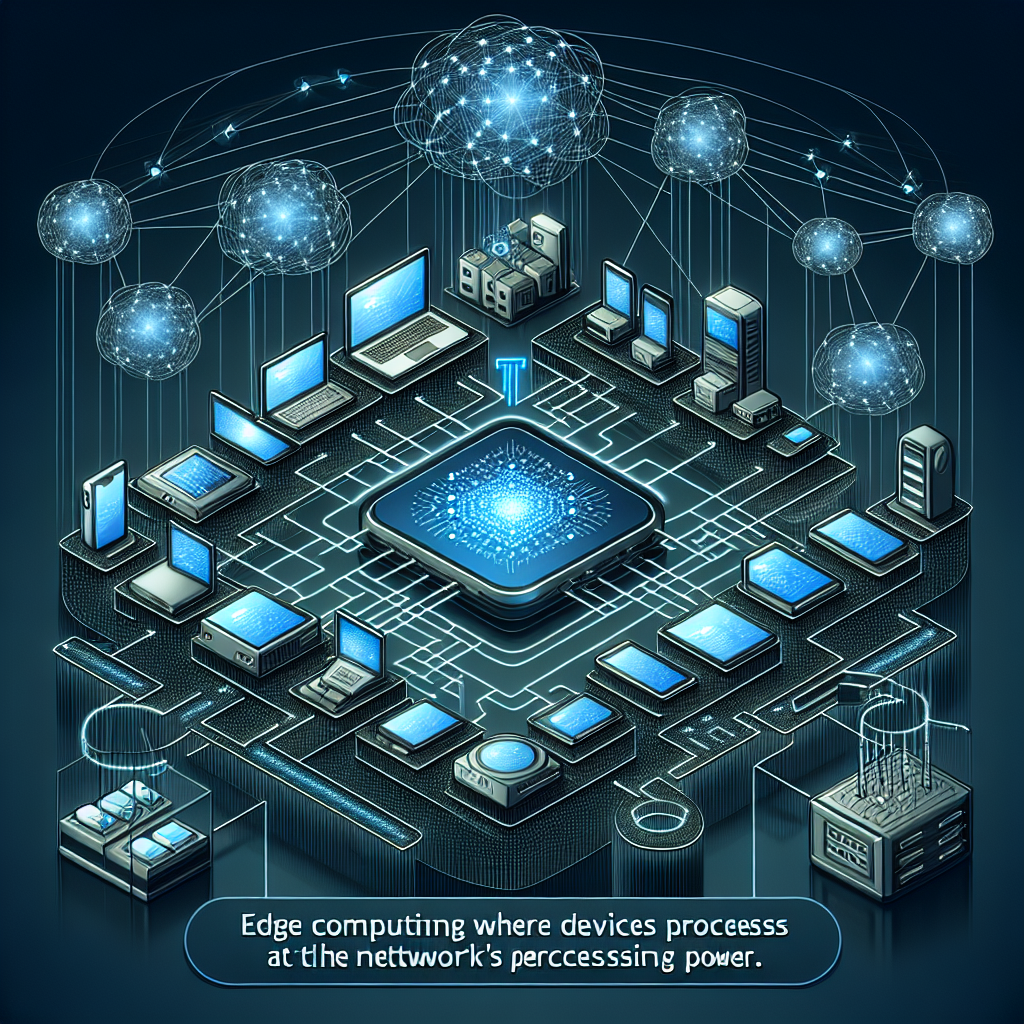
In the rapidly evolving world of technology, edge computing has emerged as a game-changer. By decentralizing data processing and bringing computation closer to the data source, edge computing reduces latency and enhances the performance of applications in real-time.
What is Edge Computing?
Edge computing is a distributed computing paradigm that brings computation and data storage closer to the devices or edge of the network. This approach minimizes the need for data to travel long distances, thus speeding up processing while ensuring lower bandwidth usage.
Benefits of Edge Computing
- Reduced Latency: By processing data closer to its source, edge computing significantly reduces latency.
- Improved Security: With data staying closer to its source, security risks related to data transmission are reduced.
- Efficient Bandwidth Use: Less data traveling through centralized data centers means efficient bandwidth utilization.
Applications of Edge Computing
Edge computing is vital in various industries. In the healthcare sector, for example, it enables real-time data processing from wearable devices, enhancing patient care. In manufacturing, edge computing facilitates predictive maintenance by analyzing machinery data on-site.
Future of Edge Computing
The future is bright for edge computing, with advancements in AI and IoT driving its growth. As more devices become interconnected, the demand for edge computing solutions will continue to rise, transforming industries by enabling smarter operations and improved efficiencies.
FAQs
1. How does edge computing differ from cloud computing?
Edge computing processes data locally, close to the data source, unlike cloud computing that requires data to be sent to centralized servers.
2. What role does edge computing play in IoT?
It plays a crucial role by supporting real-time processing and decision-making in IoT devices.
Conclusion
Edge computing is redefining how we approach data processing and management. At DH Solutions, we are committed to embracing cutting-edge technologies like edge computing to provide innovative solutions that meet the evolving needs of industries worldwide.
Tags